Beyond the Factory Floor: The 3D Printed Engine Revolution
April 10, 2026

3D printing has been changing the face of the automotive industry for years and now it is allowing designers to not only create components for the body and interior of a vehicle, but it also allows for developing 3D printable engine parts with incredible precision and efficiency.
Additive manufacturing and 3D printing is creating rapid prototyping opportunities, helping to save money with cost-effective small-batch production, increasing the possibilities of fabricating lightweight and durable components that are not available through normal machining options.
Whether it is pistons and cylinder heads, or intake manifolds and turbocharger components, 3D printing is changing the way engine components are being created.
Top Benefits of 3D Printed Engine Components
The use of 3D printing in the automotive industry for 3D printable engine components creates a lot of new opportunities that are reshaping the way designers are looking at the entire process.
One of the biggest benefits of 3D printing these engine parts is the significant reduction in the costs of production as well as lead times that used to take weeks or months to come to life when designers were faced with more traditional methods of getting their parts manufactured.
Rapid prototyping is invaluable in the automotive industry. With an accelerated development cycle, 3D printing gives rise to much faster innovation and allows manufacturers to quickly test and refine their designs before moving on to full-scale production.
Thanks to 3D printing, engineers can design and develop intricately shaped parts with geometries that can't be created any other way with new and advanced materials that can be used in the production of engine components.
High performance polymers and metal alloys that are capable of withstanding extreme heat and engine conditions have helped play a crucial role in the success of 3D printable engine components.
Materials Used in 3D Printing Engine Parts
The options available to engineers in the automotive industry for developing 3D printed engine components has increased greatly from just a few years ago. Each material has different properties that are geared towards specific applications for engine design and manufacturing needs.
3D printed metals like aluminum, titanium and steel alloys are some of the most common materials being used in this industry today. With high strength and phenominal heat resistance properties, these metals have opened up new possibilities for creating intricate, complex and lightweight components that will be able to withstand the extreme conditions of a working engine.
High performance polymers are also being used widely in the automotive industry. Materials like PEEK (Polyether Ether Ketone) and PEI (Polyethermide) offer phenominal heat and chemical resistance which makes them the perfect candidate for specific engine parts that may not require the full strength of metals but still have to perform in challenging conditions. These parts can often end up much lighter than they would if made from metals.
Carbon fiber composites are a growing frontier in 3D printing engine parts. Many of these materials combine the strength and lightweight properties of traditional carbon fiber but also provide the printability that goes hand in hand with thermoplastics. This results in parts and components that provide incredible strength-to-weight ratio which are extremely crucial when it comes to improving the overall engine efficiency and performance.
We are watching the options grow as materials science advances and new composites and alloys are being created with the manufacturing industry in mind.
The Process of 3D Printing Engine Components
For an engineer to go from concept to a finished 3D printable engine part, a lot of complex steps have to be made. The process first begins in the digital design world where the engineers use advanced CAD (Computer-Aided Design) software to create very detailed 3D models of the engine components they are planning to make. These digital blueprints are the foundation for the entire 3D printing process and allows the designer complete control over every bit of the geometry needed to create a functional part.
Once the designer has fine tuned and perfected their 3D model, it is converted into a format that a 3D printer can understand, which is usually an STL (Standard Tessel ation Language) file. This STL file is then processed through slicing software. This software "Slices" or divides the 3D model into very thin layers for the 3D printer to use to make the design come to life.
Choosing the correct material is crucial to ensuring that the final part is able to function as intended and withstand any heat and wear and tear it may encounter once it is ready to be used in the engine.
Once the material has been chosen, the 3D printer begins building the engine component, layer by layer. This allows for the creation of parts that might have intricate internal structures or complex geometries that traditional manufacturing methods simply can not accomplish at this time.
After the 3D printed part is complete, post-processing is often neccessary to ensure that the raw printed part becomes a fully finished 3D printed part. Post processing often looks like removing support materials, heat treating the parts to enhance its mechanical properties or potentially machining some of the surfaces to achieve precise tolerances that can make or break a part and it's funtion.
The final stage of this process is rigorous inspection and testing. Each 3D printed engine part must undergo extreme testing to ensure that it can perform under demanding conditions insde of an engine. This usually involves dimensinoal checks, material property tests and sometimes simulated peformance trials.
Applications of 3D Printed Engine Parts in the Automotive Industry
As 3D printing technology continues to grow, we are seeing even more ways in which it can be applied to the automotive industry.
Some of the current examples of 3D printed engine parts include:
- Pistons that are optimized with cooling channels help improve the heat dissipation and efficiency of the motors.
- Turbocharger components that are designed with complex geometries to help enhance airflow and increase peformance all around.
- Cylinder heads that are designed with cooling passages to improve thermal management.
- Custom exhaust systems that are specifically tailored for unique engine configurations and peformance requirements.
- Precision fuel injection systems that require intricate internal channels for opitimized fuel delivery to the engine.
As this technology and materials continue to improve, we can expect more and more automotive manufacturers to incorporate 3D printed parts into their motors.
Learn More About 3D Printing in the Automotive Industry
Are you interested in learning more about 3D printing in the automotive industry? Feel free to check out some of our case studies and articles that give a better understanding of how this technology is shaping the way the automotive industry is moving.
Do you have questions about which machines and materials would be best suited to your project and design needs? Email us at info@3duniverse.org and we can help you fine tune your search!
Written By Jen Owen

Related Articles

How Krones Uses 3D Printing to Keep Beverage Production Lines Running
Jul 09, 2026
Every day, millions of glass bottles, cans, and PET containers move through a Krones production... More
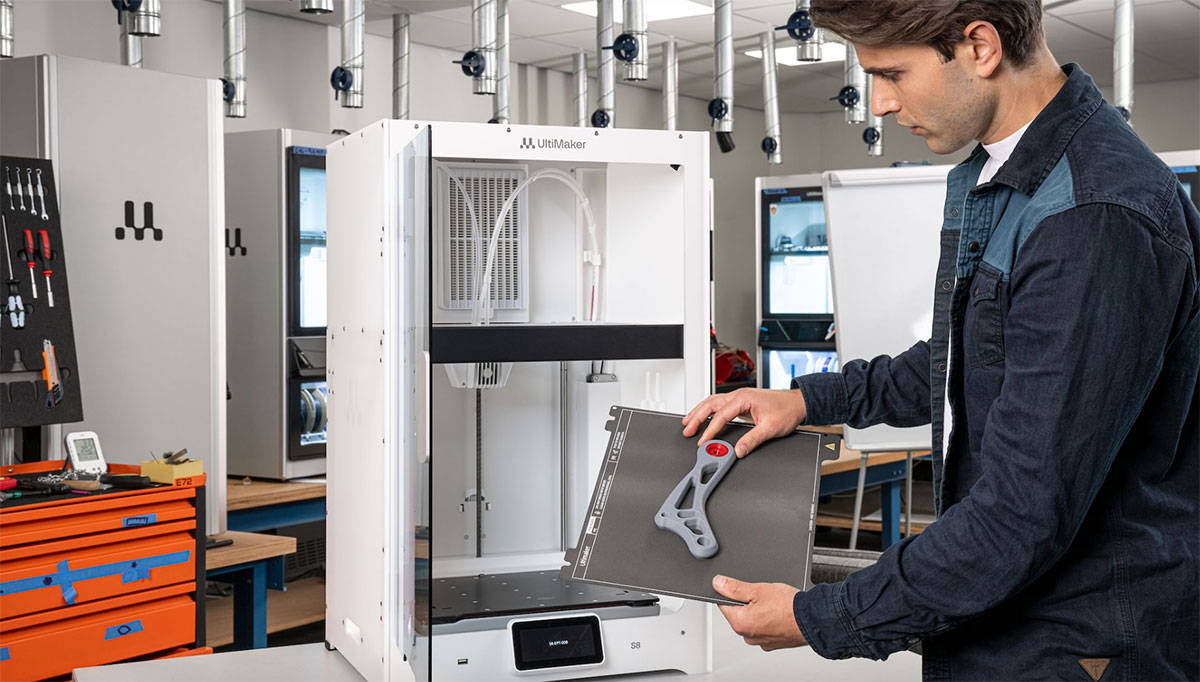
Introducing the UltiMaker S8 and S8 Pro Bundle
Mar 19, 2025
We are excited to share the UltiMaker S8 and S8 Pro Bundle, the newest addition... More

Top 10 3D Printing Ideas for Small Businesses
Aug 08, 2024
Have you been wondering how you can start earning a living with your own 3D... More
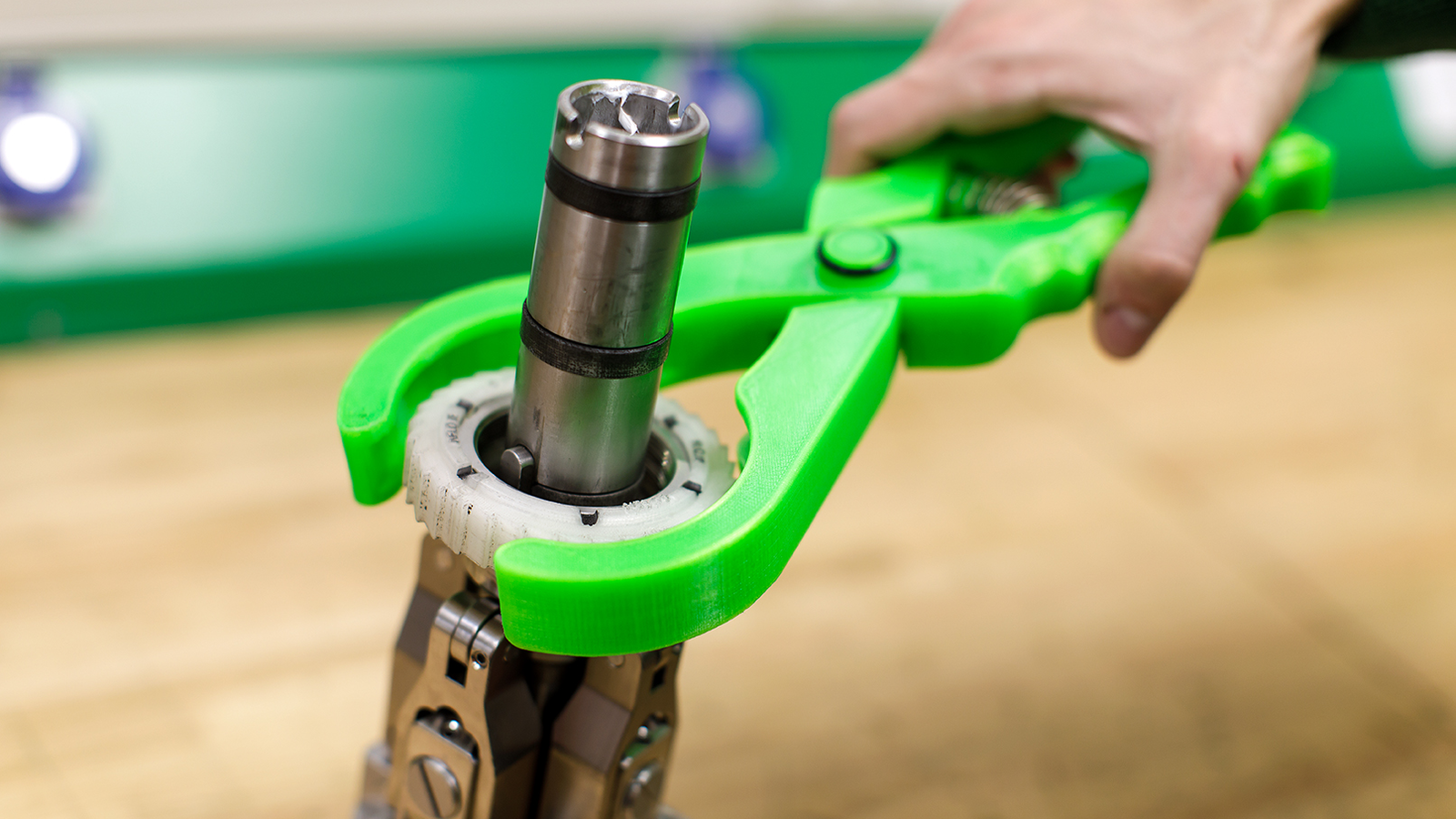
3D Printing is Transforming the Food and Beverage Industry
Nov 14, 2023
3D printing is transforming the food and beverage industry and being used to create custom parts,... More
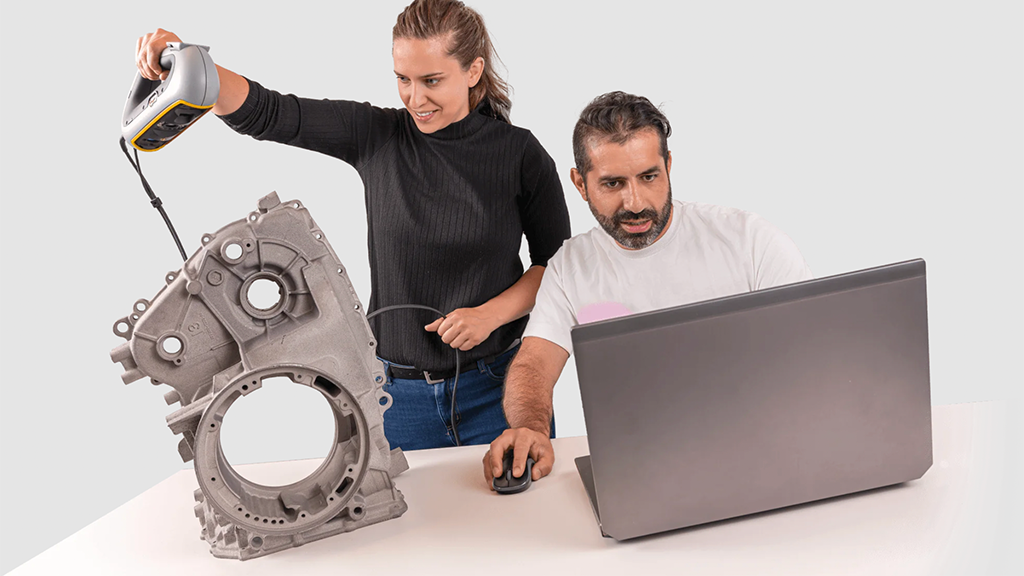
How 3D Scanning and 3D Printing are Being Combined to Improve Product Development in the Manufacturing Industry
Nov 09, 2023
3D scanning and 3D printing are revolutionizing the field of product design and manufacturing. These... More
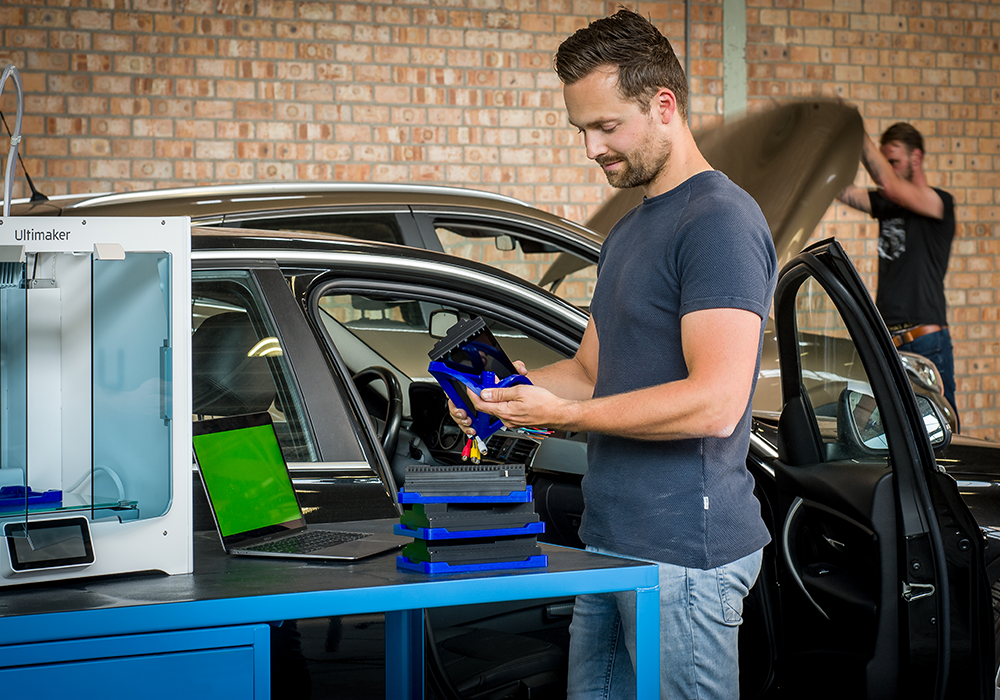
3D Printing in the Automotive Industry
Aug 10, 2022
The automotive industry is ripe for the adoption of 3D printing technology which has already... More
Search All Articles
Latest Posts From Digital Fabrication in the Workplace
All Blog Categories
-
3D Universe Untethered Video Podcast Series
-
Digital Fabrication in Education
-
Digital Fabrication Projects
-
Digital Fabrication Tutorials, Tips, and Tricks
-
Slicing Software
-
3D Printing Materials
-
Case Studies
-
Digital Fabrication Products
-
3D Forming (Vacuum Forming & Pressure Forming)
-
Laser Cutters
-
Digital Fabrication in the Workplace
-
3D Printed Prosthetics and Assistive Technology
-
3D Modeling (CAD)
-
Digital Fabrication in the News


